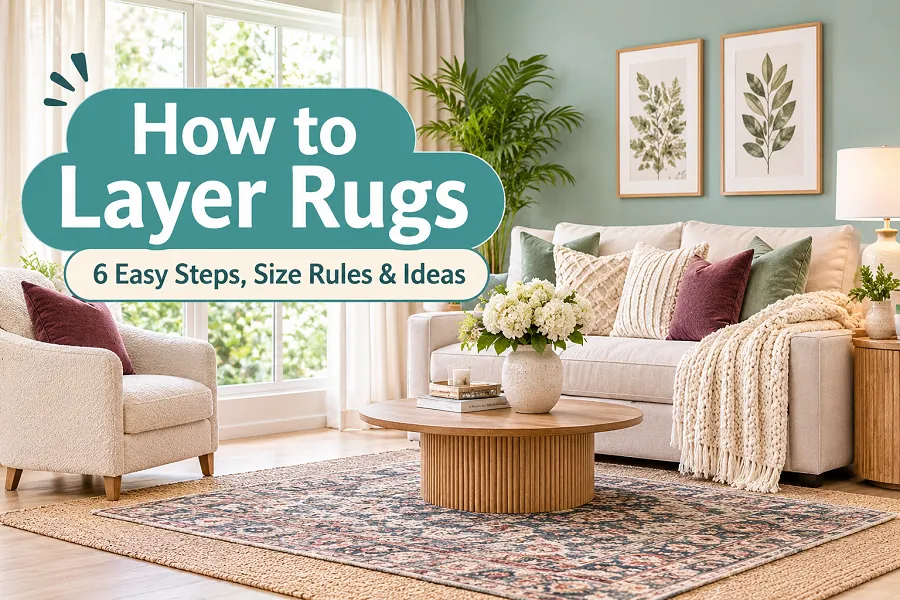
To layer rugs, start with a large, flat, neutral rug as the base. Place a smaller, bolder rug on top. Leave a border of the base rug showing on every side, and add a non-slip pad so nothing slides.
The rest of this article helps you get it right in your own room. Layering can fix a rug that is too small, add texture to a plain floor, and give an open room clear zones. It can also look messy if the sizes, colors, or textures clash. With inspiration and quality carpet options from Carpet Land, here is how to layer rugs beautifully and avoid common styling mistakes.
Rug Layering Rules at a Glance
Keep these six rules in mind and you will avoid most problems.
- Start with a large, flat, plain base rug that fits under your main furniture.
- Choose a smaller top rug that is bolder in pattern, color, or texture.
- Leave at least 6 inches (15 cm) of the base showing on every side. Twelve inches (30 cm) or more looks better.
- Put a fluffy or bumpy rug on top of a flat one, never the other way around.
- Share at least one color between the two rugs and the room.
- Use a non-slip pad under the base and a grip layer between the rugs.
What Is Rug Layering?
Rug layering means placing one rug on top of another. The bottom rug is the base. The top rug is the accent. It works on hardwood, tile, marble, laminate, and even carpet.
The base rug does the heavy work. It sits under the furniture, sets the size of the seating area, and gives the eye a calm background. The top rug is the part people notice. It adds pattern, a new shape, or a pop of color.
Layering is not the same as putting two rugs side by side. The rugs overlap, and the base shows around the top rug like a frame.
Why Layer Rugs?
People layer rugs for practical reasons as well as looks.
- It fixes a rug that is too small. A small rug can look lost in a big room. A larger base fills the space, and the small rug becomes an accent.
- It adds texture and warmth. Two rugs give extra cushion and a softer feel underfoot.
- It lets you try bold patterns. You can add a lively design without buying a large, patterned rug.
- It creates zones. In an open-plan home, a second rug can mark a reading corner or a dining spot.
- It can save money. Large plain rugs can cost less than large patterned ones.
How to Layer Rugs Step by Step
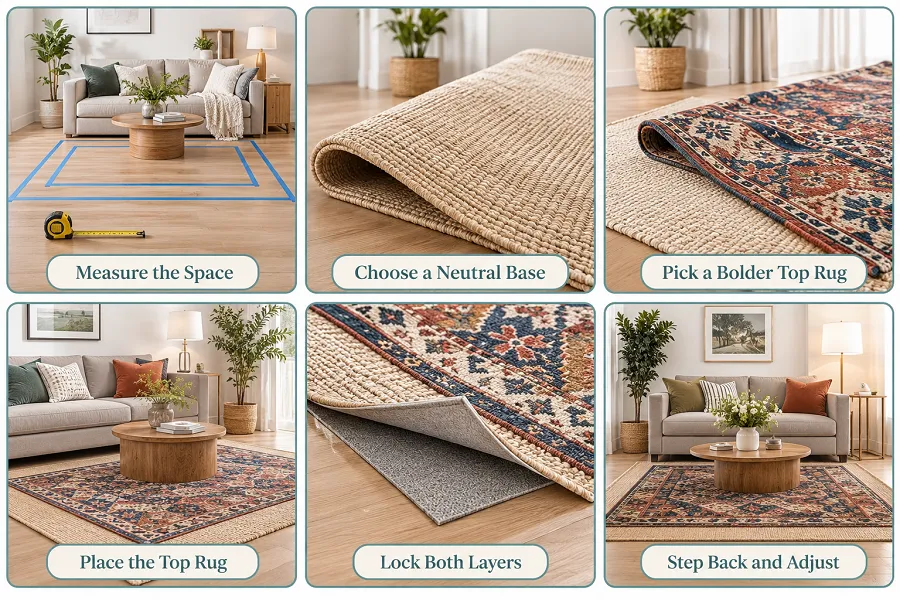
Follow these six steps in order. The tape test alone can save you from an expensive mistake.
Step 1: Measure the Space and Mark It With Tape
Measure the room or seating area first. Then use painter’s tape to mark where the base rug will sit. Check that the front legs of your sofa and chairs fall inside the tape. Next, mark the smaller top rug inside that shape. Tape lets you see the sizes before you spend money. It also shows if the top rug will hit a door, a vent, or a heavy table leg.
Step 2: Choose a Neutral Base Rug
Pick a base rug that is flat and plain. Jute, sisal, seagrass, cotton flatweave, and low-pile wool all work well. A flatweave is woven flat with no tufts, so it lies smooth under another rug. Stay with soft neutrals like beige, ivory, sand, or light grey. A calm base lets the top rug stand out. A loud base makes the two rugs fight for attention.
Step 3: Pick a Smaller, Bolder Top Rug
Now choose the star. Look for a pattern, a strong color, or a different texture. Kilims, vintage-style designs, and geometric flatweaves are popular. Wool is a good choice because it is resilient and holds its shape, and many of the best wool rugs come in bold patterns. Make sure the top rug is clearly smaller than the base.
Step 4: Place the Top Rug Over the Base
Lay the base rug first and smooth it flat. Then set the top rug on it. Try it centered, then try shifting it a little off-center or turning it slightly. A small shift often looks more relaxed than a perfect center. Put the top rug where people sit, stand, or look, such as under the coffee table or at the foot of the bed.
Step 5: Lock Both Layers in Place
Layered rugs slide more than a single rug. Put a non-slip pad under the base. Add a thin grip layer between the two rugs. If you use tape, test it on a small corner first, because some adhesives leave marks. Walk across the top rug. If it shifts or bunches, fix it now.
Step 6: Step Back and Adjust
Look at the room from the doorway and from the sofa. Squint a little. If you can still see where one rug ends and the other begins, the contrast is working. If the two blur into one shape, change the pattern or color of the top rug. A black and white photo of the room also shows contrast clearly. If the top rug looks lost, go up one size.
Rug Layering Size Rules
Size is where most people go wrong. Get it right and many color mixes will work. Get it wrong and even a lovely pair looks off.
How Much Smaller Should the Top Rug Be?
A good starting point is one to three feet (30 to 90 cm) smaller than the base in both width and length. As a quick check, the top rug usually covers about half to two thirds of the base. Furniture matters too. A coffee table with thin legs shows off a smaller rug. A heavy, chunky table hides much of it, so you need a bigger top rug.
How Much of the Base Rug Should Show?
Leave at least 6 inches (15 cm) of the base visible on every side. Twelve inches (30 cm) or more is better, because a clear border makes both layers easy to read. A thin strip looks like a mistake. Use your tape outline to check the border all the way around.
Base and Top Rug Size Pairs That Work
These pairs are a starting point. Sizes vary a little between makers, so measure the real rug. You can also check the standard rug sizes before you buy.
| Base rug | Top rug | Border showing (sides / ends) | Good for |
| 8 x 10 ft (240 x 300 cm) | 5 x 8 ft (150 x 240 cm) | 18 in / 12 in | Living room with a light coffee table |
| 8 x 10 ft (240 x 300 cm) | 6 x 9 ft (180 x 270 cm) | 12 in / 6 in | Larger seating area |
| 9 x 12 ft (275 x 365 cm) | 6 x 9 ft (180 x 270 cm) | 18 in / 18 in | Big living room or bedroom |
| 9 x 12 ft (275 x 365 cm) | 5 x 8 ft (150 x 240 cm) | 24 in / 24 in | Open-plan room with a small accent |
| 5 x 8 ft (150 x 240 cm) | 3 x 5 ft (90 x 150 cm) | 12 in / 18 in | Entryway or small room |
Best Rug Combinations for Layering
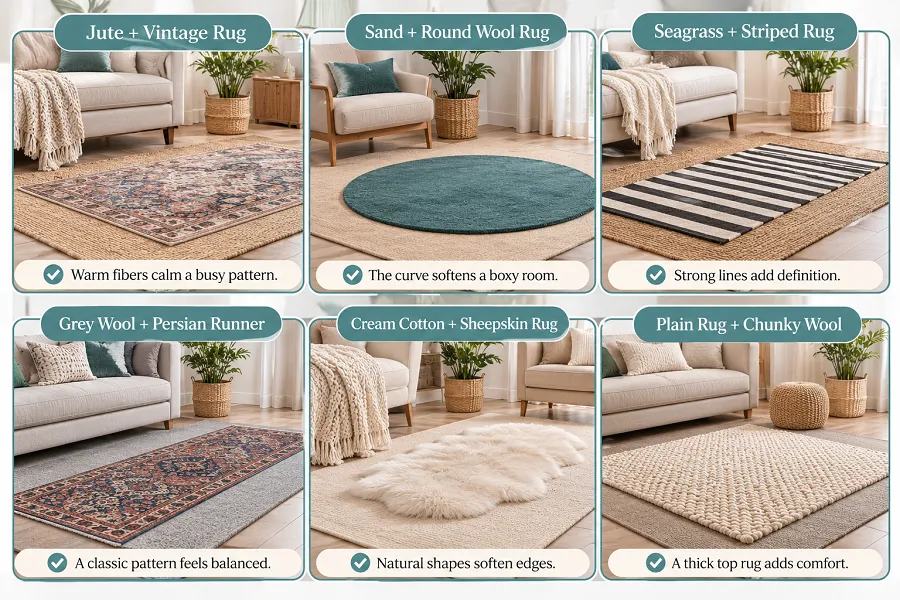
Here are six pairs that work, and why they work.
| Base rug | Top rug | Why it works |
| Large jute | Faded vintage-style rug | Warm fibers calm a busy pattern. |
| Sand flatweave | Round wool rug in one bold color | The curve softens a boxy room, and the color becomes the focus. |
| Seagrass | Black and white striped flatweave | Strong lines read clearly against a textured base. |
| Light grey wool | Persian-style runner | A classic pattern on a quiet base looks calm, not heavy. |
| Cream cotton | Hide-style or sheepskin-look rug | Natural shapes soften straight edges. |
| Plain low-pile rug | Chunky tufted wool | A thick top rug adds comfort where you stand. |
Best Base Rugs for Layering
The best base rugs are flat, sturdy, and plain.
- Jute: warm in tone and affordable, but it can feel rough underfoot and it does not like water.
- Sisal: very tough, with a tight weave, though it can be stiff and it stains easily.
- Seagrass: smooth and naturally stain-resistant, but it comes mostly in natural tones.
- Cotton or wool flatweave: soft, flat, and easy to find in neutral colors.
Natural fibers and synthetics each have trade-offs, and the main types of rugs differ in how they are made and how they wear.
Best Top Rugs for Layering
The top rug is where your taste shows. Good choices include kilims, vintage-style rugs, geometric flatweaves, and simple Moroccan-style rugs with diamond patterns. For softness, add a sheepskin-style or tufted rug in a bedroom. Keep the top rug low or medium in height so it lies flat and the edges are easy to step over.
Rugs You Should Not Layer
Avoid a few combinations. A high-pile rug under another rug lets the top rug sink, slide, and buckle. Two shaggy rugs together look heavy and messy. Two rugs of the same size cancel out the border. A very bold top rug on a very bold base gives the eye nowhere to rest.
How to Layer Rugs by Pattern, Texture and Color
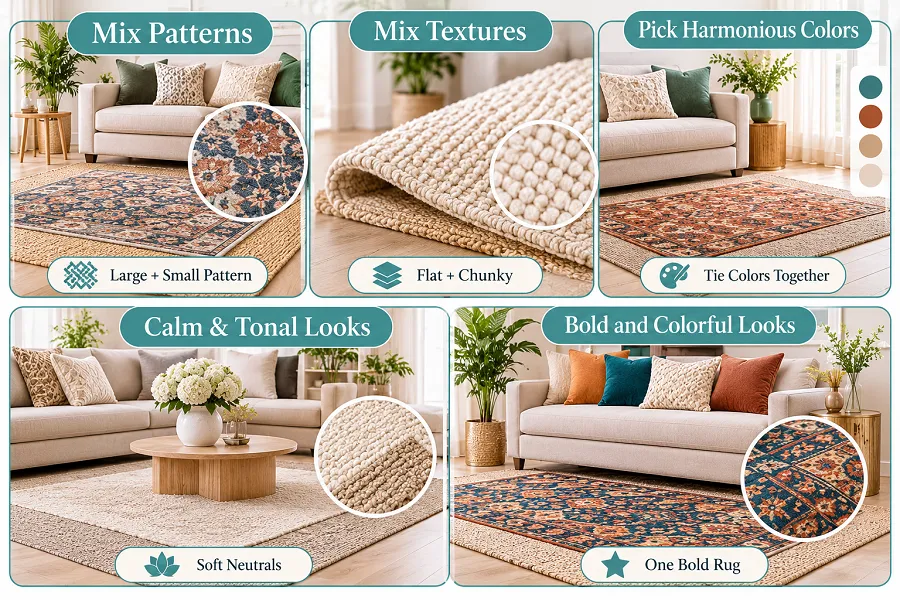
Pattern, texture, and color decide whether layered rugs look planned or random. Change one or two of these between the rugs, not all three at once.
How to Mix Rug Patterns
The simplest option is a plain base with a patterned top rug. If you want two patterns, change the scale. Put a large pattern on one rug and a small, tight pattern on the other. Make sure the rugs share a color. If both rugs are loud, nothing gives the eye a rest, so switch one to a solid or a soft tone.
How to Mix Rug Textures
Texture contrast is what makes layered rugs feel rich. Put a flat rug under a fluffy or chunky one. Two rugs with the same texture blend together and look like one oddly shaped rug. Pile height matters here. Pile is the length of the fibers standing up from the backing, and the top rug should not be so tall that it makes a thick edge to trip on.
How to Pick Rug Colors That Work Together
Start with what is already in your room. Pull one color from the sofa, curtains, or art, and look for it in the top rug. That shared color ties everything together. Brown, tan, and camel rugs suit many tones, and the colors that go with brown rugs include sage, navy, and terracotta. A grey sofa is also easy to match, and the rug colors that go with a grey couch range from soft ivory to dark navy.
Calm and Tonal Looks
Want a quiet room? Keep both rugs in the same color family, such as sand and cream, or soft grey and white. Let texture do the work instead of color. This look is easy to live with and suits small rooms.
Bold and Colorful Looks
Want more energy? Pair a neutral base with a top rug in rust, teal, or mustard, then repeat that color in a cushion or a vase. One bold rug is plenty. Let the base stay quiet.
How to Layer Rugs by Shape and Placement
Shape and angle can change the look as much as color does.
Round Rug Over a Rectangular Rug
A round top rug over a rectangular base softens the square lines in a room. It works well under a round coffee table or in the middle of a seating group. Center the round rug under the table, and make sure the base is big enough to hold the sofa’s front legs.
Runner Over an Area Rug
A runner can sit at the foot of a bed, beside a sofa, or in front of a console table. Place it parallel to the long side of the furniture and keep it narrower than the base so a border shows. It is an easy way to add pattern without covering the whole base rug.
Off-Center and Diagonal Layering
Turn the top rug at a slight angle, with one corner pointing toward the sofa or the bed. This look feels relaxed and playful. It only works when the base is big enough to frame the turned rug. In a tight room, keep both rugs square to the walls.
How to Layer Rugs in Every Room
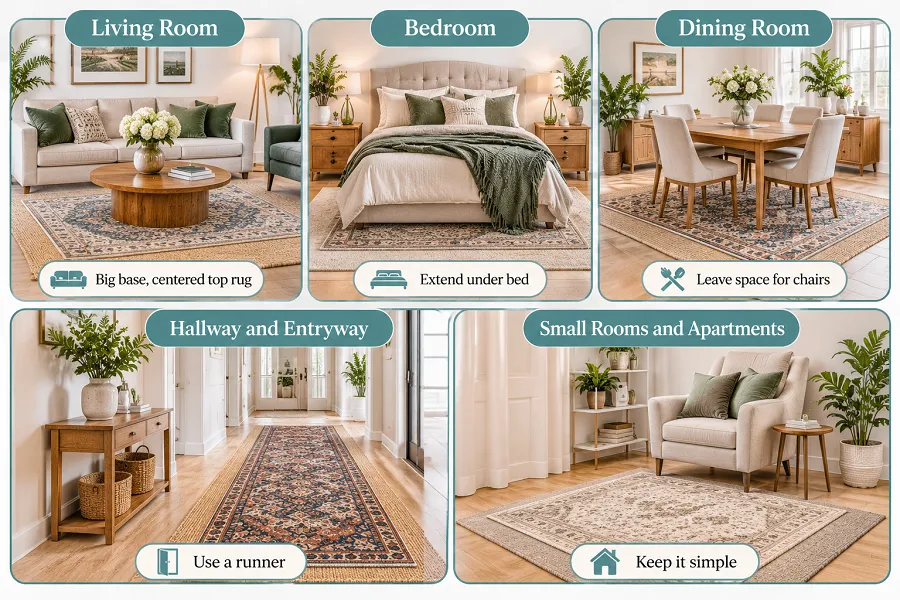
The same rules apply everywhere, but each room has its own needs.
Living Room
In a living room, the base rug should be big enough to hold at least the front legs of the sofa and chairs. The top rug then sits in the middle of the seating area. Good rug placement in a living room starts with where the furniture legs land.
Sofa and Coffee Table
The coffee table should sit fully on the top rug, with some space to spare on each side. A table with thin legs works with a smaller rug. A heavy, solid table needs a bigger one.
Sectional Sofas
Let the base rug reach under the long arms of the sectional. Place the top rug in the open corner of the L-shape, or use a round rug to fill the space in front.
Bedroom
Put the base rug under the bed so it reaches at least 18 inches (45 cm) past each side. Place the top rug where your feet land, either at the foot of the bed or as a runner along one or both sides. A soft, textured rug works well for bare feet. A bold pattern also works, because the bed hides part of the base.
Dining Room
Chairs move, so the rug under the table must be big enough to catch them. It should reach about 24 inches (60 cm) past the table on every side. Use a flat, low-pile top rug so chair legs do not catch on thick edges. With a round table, a round top rug over a rectangular base looks balanced.
Hallway and Entryway
Layering works in a wide hallway or an entryway. Put a narrower runner over a flat base. Keep the total thickness low and check that doors swing freely over both layers. Choose durable rugs here, because shoes and dust arrive first at the door.
Small Rooms and Apartments
Small rooms can handle layering if you keep it simple. Choose a base that holds the main furniture, then add one small top rug in a light color with a calm pattern. Do not stack more than two rugs. Ideas that help you style a small apartment, such as light colors and fewer patterns, also apply to rugs.
Can You Layer a Rug Over Carpet?
Yes, you can layer a rug over carpet. People do it to cover plain or worn carpet, add pattern to a neutral room, or mark a seating area in a large carpeted space. Treat the carpet as the base rug and follow the same size rules.
When It Works Best
It works best on dense, low carpet. Choose a flat or low-pile top rug with a clear contrast in color or texture. Thick, plush carpet makes the top rug sink and ripple, so it is a harder match.
How to Stop a Rug Sliding on Carpet
Pads made for hard floors often do not grip carpet well. Look for a pad or gripper made for use over carpet. Heavy furniture legs on the edges of the rug help hold it in place. Check the rug every few weeks, because carpet fibers can let it creep.
Layered Rug Safety, Pads and Grip
Two rugs mean two chances to slip or trip. A few small steps lower the risk.
Best Rug Pad for Layered Rugs
Use a thin, dense pad under the base rug. Felt-and-rubber pads cushion and grip well, and they are easy to trim to size. Smooth floors like tile and marble, which are common in many UAE homes, make slipping more likely, so do not skip the pad there. Check that the pad is safe for your floor type, because some plastic pads can mark floor finishes.
How to Stop Bunching, Curling and Tripping
Keep the top rug flat and low. If the corners curl, roll the rug the opposite way and leave it flat for a day or two. Use corner grippers for stubborn edges. The step between the two rugs is small, but keep walkways clear of it, especially in homes with children or older adults.
How to Clean and Care for Layered Rugs
Layered rugs need a little more care than a single rug, because dust and moisture can hide between the layers.
Cleaning Each Layer Separately
Lift the top rug when you vacuum and clean the base rug too. Rotate both rugs every few months so they wear evenly and fade less in sunlight. Blot spills right away instead of rubbing. Keep jute and sisal dry, since water can leave marks. Check each care label, because the rugs may need different methods. Moisture trapped between layers can cause a musty smell. If it happens, there are simple ways to get smells out of rugs.
Common Rug Layering Mistakes to Avoid
Most layering problems come down to five mistakes.
Matching the Two Rugs Too Closely: When color, pattern, and texture are all alike, the layers vanish. Change at least two of the three so each rug has its own look.
Choosing a Base Rug That Is Too Small: A small base makes the whole setup look like it is floating. The base should hold the main furniture, with the top rug as a smaller accent.
Using Two Rugs With the Same Texture: Two flat rugs or two shaggy rugs blend together. Put something flat under something with more texture so the top rug stands out.
Mixing Too Many Patterns: One rug should be the star. If both rugs are busy, the eye has nowhere to rest, and the room feels crowded.
Skipping the Rug Pad: Without a pad, rugs slide, wrinkle, and wear faster. A pad also protects the floor and lowers the risk of a fall.
Rug Layering Ideas by Style
Use these combinations as starting points and adjust them to your room.
Boho Rug Layering Ideas
Pair a large jute base with a faded, vintage-style rug. Add woven baskets, plants, and a sheepskin. The mix of natural fibers and worn colors feels relaxed and collected.
Modern and Minimal Rug Layering
Use a light flatweave base with one geometric or single-color top rug. Keep the palette to two or three colors. Clean lines and open floor space keep the look sharp.
Traditional and Rustic Rug Layering
Lay a Persian-style rug over a light wool base for a classic look. For a rustic room, try a hide-style rug on jute beside wood furniture. These pairs suit warm lighting and natural wood.
Rug Layering FAQs
Q1. What is the rule for layering rugs?
Use a large, plain, flat base and a smaller, bolder top rug. Leave at least 6 inches (15 cm) of the base showing on every side. Make the rugs different in texture, share one color between them, and add a non-slip pad so the layers stay put.
Q2. What size should the top rug be?
Usually one to three feet (30 to 90 cm) smaller than the base in width and length. As a quick check, it covers about half to two thirds of the base. A 5 x 8 ft rug on an 8 x 10 ft base is a common pair.
Q3. Can you layer two patterned rugs?
Yes. Make the scale different, such as a large pattern under a small one, and make sure the rugs share a color. If both rugs are loud, use a plain base instead.
Q4. Can you layer rugs on carpet?
Yes. Use a flat or low-pile rug on dense, low carpet. Add a pad or gripper made for carpet so the rug does not wrinkle or creep.
Q5. Do you need a rug pad for layered rugs?
Yes. A non-slip pad under the base stops sliding, and a thin grip layer between the rugs keeps the top rug from shifting. Both lower the risk of trips.
Q6. What is the best base rug for layering?
Jute, sisal, seagrass, and flat cotton or wool weaves work best. They lie flat, come in neutral colors, and let the top rug show. Avoid high-pile rugs as a base.
Q7. How do you layer rugs in a small room?
Pick a base that holds the main furniture, then add a small, simple top rug in a lighter color. Keep the pattern calm, and do not stack more than two rugs.
Q8. How do you clean layered rugs?
Lift the top rug and vacuum both layers. Blot spills right away, and keep jute and sisal dry. Rotate the rugs every few months, and keep the area dry to prevent musty smells.
Final Thoughts
Layering rugs is easier than it looks. Start with a big, plain base. Add a smaller, bolder top rug. Leave a clear border, mix textures, and use a pad. Tape the sizes on the floor first, then adjust until the room feels right. If a layout does not work, change the top rug before you change the base. A small tweak often fixes the whole look.