
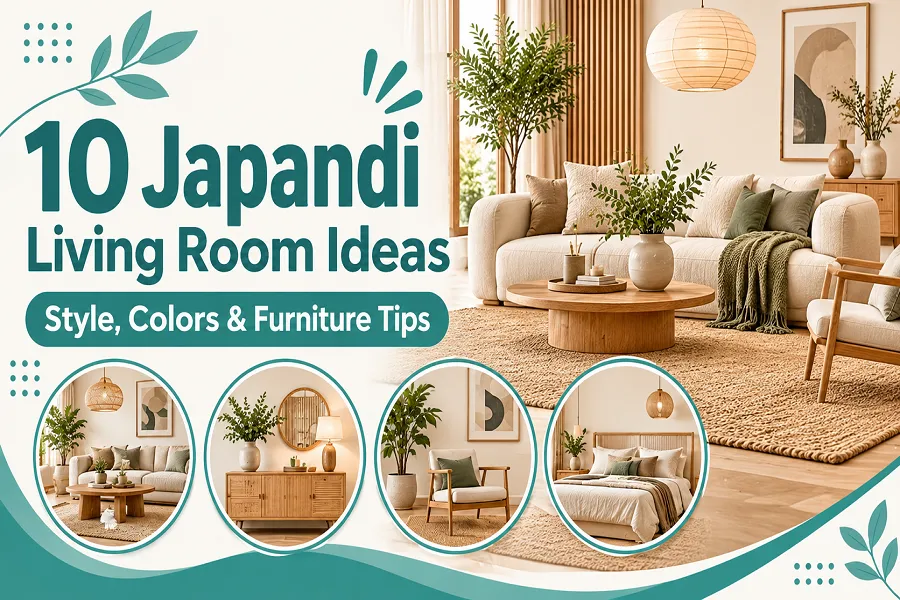
A japandi living room feels calm the moment you walk in. It mixes the quiet, simple side of Japanese design with the warm, cozy side of Scandinavian homes. The result is a space with fewer things, better things, and plenty of room to breathe.
This guide shows you how to create a Japandi-style living room that works in real life. You will learn about the colors, furniture, lighting, and textures that matter, with practical insights from Carpet Land. You will also find 10 ideas for small, dark, and cozy rooms. If you like the idea of a minimalist lifestyle and a Japandi living room, this guide is a good place to start.
Quick answer: A japandi living room blends Japanese minimalism with Scandinavian coziness. It uses warm neutral colors, low furniture, natural wood, soft fabrics, and layered lighting. Surfaces stay mostly clear, and every piece has a purpose.
What Is a Japandi Living Room?
A japandi living room is a living space that combines Japanese and Scandinavian design. The name is a mix of “Japan” and “Scandinavian.” Both styles value simple shapes, natural materials, and good craftsmanship. They just show it in different ways.
Japanese design brings restraint. It likes open space, low seating, and the idea of wabi-sabi, which means finding beauty in simple things that are a little imperfect. Scandinavian design brings comfort. It adds soft textiles, light woods, and the cozy feeling people call hygge.
Put the two together and you get a room that is quiet but not cold. It feels calm, balanced, and lived in. That is why the living room japandi look suits busy homes so well. The room gives you a place to rest, and it does not ask for much upkeep.
Key Characteristics of a Japandi Style Living Room
A japandi style living room is easy to spot once you know what to look for. The table below shows how each part of the style comes from its two roots.
| Element | Japanese influence | Scandinavian influence | What you see in the room |
| Shape | Low, simple forms | Soft, rounded edges | A low sofa with gentle curves |
| Color | Earthy, muted tones | Light, airy neutrals | Sand, cream, and soft grey |
| Material | Dark wood, paper, bamboo | Light oak, wool, linen | A mix of light and dark wood |
| Space | Open and uncluttered | Bright and welcoming | Clear floors and clean surfaces |
| Mood | Calm and balanced | Warm and cozy | A room you want to stay in |
Three habits hold the style together. First, clean lines. Furniture has simple shapes with no heavy trim. Second, natural light. Windows stay open and bright, and curtains are thin and soft. Third, function first. If a piece has no job, it probably does not belong.
This is the part many people miss. Japandi is not about owning less just to look empty. It is about choosing each item with care, so what stays in the room is useful and good to look at.
Japandi Living Room Color Palette
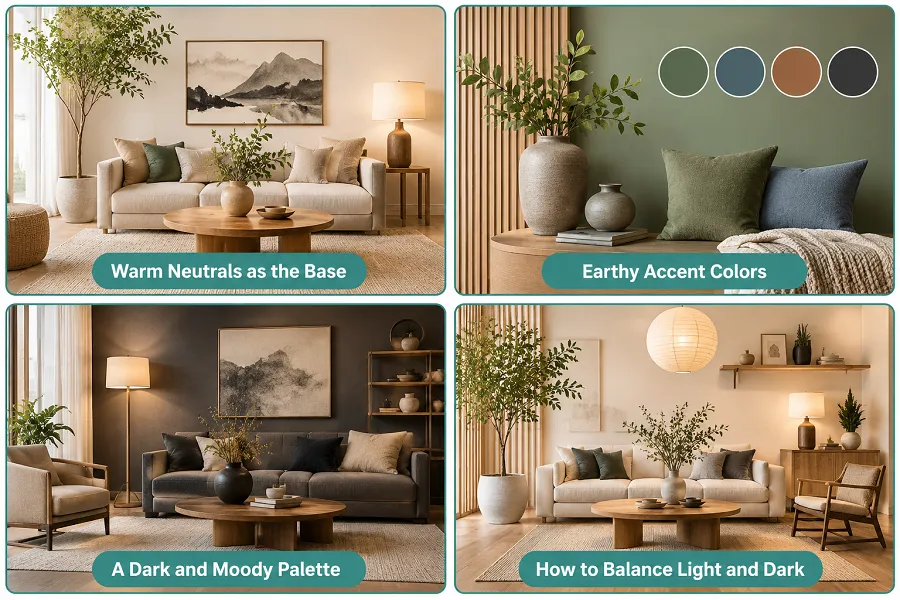
Color sets the mood faster than furniture does. A japandi living room uses a quiet palette with small touches of nature. Here is how to build it.
Warm Neutrals as the Base
Start with warm neutrals on the walls and large pieces. Think sand, cream, warm white, and greige. A beige japandi living room feels soft and bright without looking flat. Pick shades with a warm undertone. Cool greys and stark whites can make the room feel like an office. If you like grey, soft and warm grey carpets are a safer pick than cold, bluish ones.
A warm japandi living room also works well in rooms with little sun. The warm tones act like a gentle glow, even on a cloudy day.
Earthy Accent Colors
Accent colors come from nature. Sage green, muted blue, clay, and charcoal all fit. A japandi green living room might use a soft olive sofa or green plants against pale walls. A japandi blue living room can use a dusty blue cushion or a stone-blue vase.
Keep the colors muted. If a color looks bright on a screen, it will likely look too loud in your home. Choose one or two accent colors and repeat them in small doses.
A Dark and Moody Palette
You can go dark and still stay true to the style. A dark japandi living room uses charcoal, mocha, or soft black on the walls. Pair them with warm wood, such as walnut or dark oak, and plenty of soft light.
A dark wood japandi living room looks best when you add lighter fabrics. Linen curtains and a cream rug stop the room from feeling heavy. Dark and moody works well in the evening, so plan your lamps early.
How to Balance Light and Dark Tones
A simple rule helps here. Use about 60 percent of a main light color, 30 percent of a second tone, and 10 percent of an accent. For example, cream walls and rug (60), oak furniture (30), and a charcoal vase or cushion (10).
Keep contrast low. Japandi likes gentle shifts, not sharp black and white lines. If something feels loud, swap it for a softer shade.
Best Materials and Textures for a Japandi Living Room
Texture does the work that color cannot. In a room with few objects, the feel of each surface matters a lot. Mix smooth and rough, soft and hard.
| Material | Where to use it | Why it works |
| Oak or ash | Tables, shelves, chair frames | Light, warm, and calm |
| Walnut | Side tables, frames, consoles | Adds contrast and richness |
| Bamboo and rattan | Baskets, blinds, chairs | Light and natural |
| Linen | Curtains, cushions, sofa covers | Soft and relaxed |
| Wool | Rugs and throws | Warm and cozy underfoot |
| Jute | Rugs and baskets | Rough, natural texture |
| Ceramic and stone | Vases, bowls, small tables | Handmade and grounded |
| Paper | Lamp shades | Soft, glowing light |
Choose matte finishes over shiny ones. Glossy surfaces bounce light and feel loud. Matte wood and plain fabric feel quiet. You may also see shou sugi ban, an old Japanese way of charring wood to make it dark and strong. A small piece, like a shelf or a bench, adds a nice dark note.
Look for grain, small marks, and uneven edges. These details show that a thing is real and made with care.
Japandi Living Room Furniture
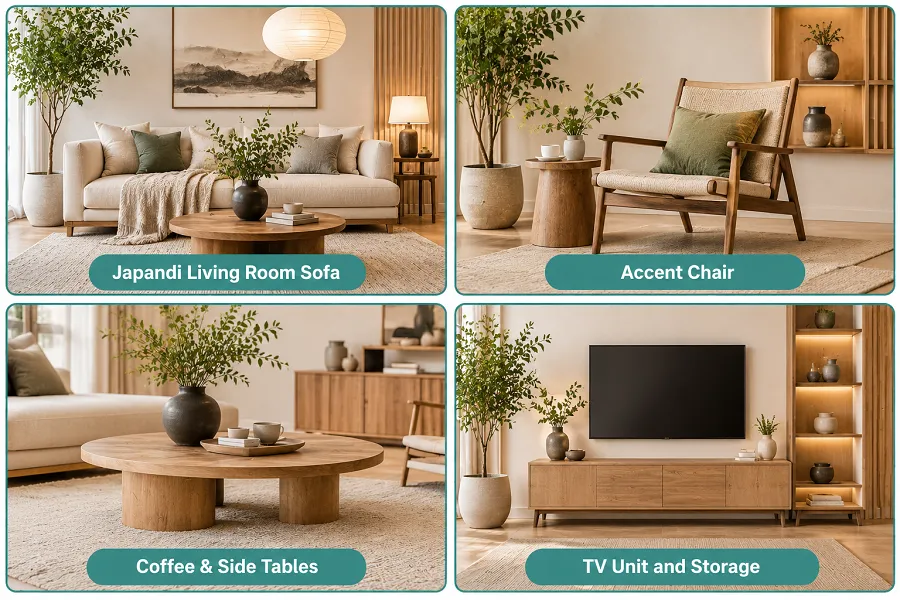
Good japandi living room furniture is simple, low, and well made. You do not need many pieces. You need the right ones. Most people do well with a sofa, one or two chairs, a coffee table, and storage.
Sofa
The sofa is the main piece, so choose it first. A japandi living room sofa sits low to the ground, with slim legs and clean lines. Neutral colors like cream, stone, oat, and soft grey are safe. A greige sofa is a flexible choice that works with warm and cool woods.
What to look for
Look for linen or cotton blends, firm cushions, and a visible gap under the sofa. That gap lets light pass and makes the room feel bigger.
What to avoid
Skip big rolled arms, heavy tufting, and shiny fabrics. They fight with the calm look.
Accent Chair
A japandi chair for the living room adds a second seat and a bit of shape. Wood-frame lounge chairs, woven seats, and low curved chairs all work. Pick one that is different from the sofa but shares a color or material. Do not match everything. A little difference makes the room feel natural.
Coffee Table and Side Tables
A japandi living room coffee table is usually low, in solid wood, with soft corners. Round tables are friendly in small rooms because there are no sharp corners to bump into. Oak, ash, and walnut are common choices.
Choosing the right height
Keep the table a little lower than the sofa seat, so it is easy to reach. Side tables can be small and simple, such as a round wood stool or a stone block. Leave space around each one.
TV Unit and Storage
Most homes have a TV, and japandi can handle it. Place the screen on a low media console in wood, with closed doors for cables and remotes. Floating units keep the floor open and make cleaning easier.
Closed storage works better than open shelves for most people. Open shelves need constant tidying, while a sideboard hides the mess for you.
10 Japandi Living Room Ideas for Every Space
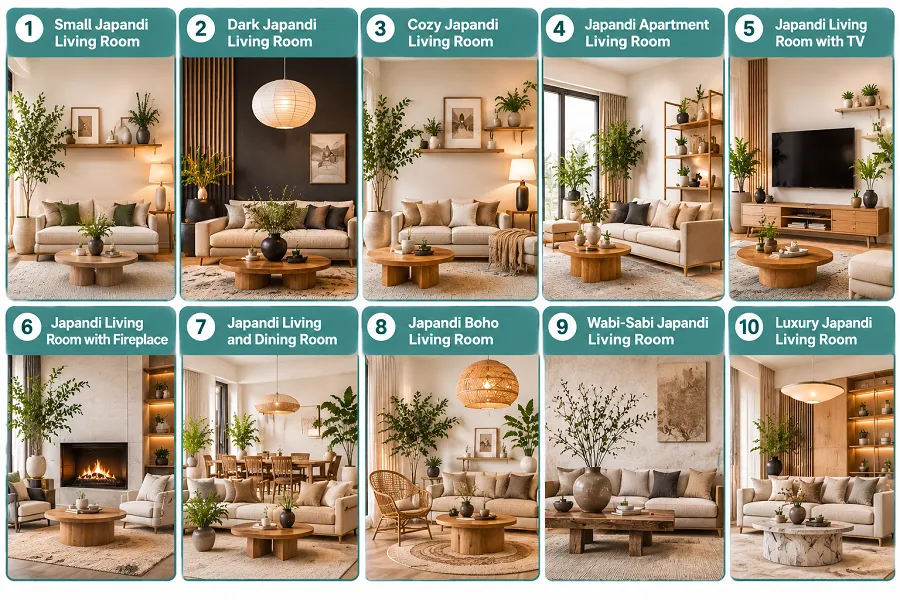
Looking for japandi living room inspiration? These ten ideas cover small rooms, dark rooms, and homes with a TV or fireplace. Pick the ones that fit your space, and borrow small details from the others.
1. Small Japandi Living Room
A small japandi living room works best with fewer, lighter pieces. Pick furniture with raised legs so you can see the floor underneath. That makes the room feel bigger. Choose light woods like ash or birch, and place one large mirror across from a window to bounce light around. Keep one wall mostly empty. Empty space is part of the style, not a mistake.
- Best for: compact rooms and studio layouts.
- Benefits: feels bigger and stays easy to keep tidy.
- Design tip: keep the rug and walls in similar tones so the floor looks wider.
2. Dark and Moody Japandi Living Room
Dark walls in charcoal, mocha, or soft black can make a room feel rich and quiet. Keep the furniture low and the wood warm so the room does not feel heavy. Add linen curtains and a wool rug for softness. If you have dark ceiling beams, leave them bare and keep the walls lighter to balance them. Use warm lamps instead of one bright ceiling light.
- Best for: rooms you mostly use in the evening.
- Drawbacks: needs more lamps, and dust shows faster on dark surfaces.
- Spec to ask for: matte, low-sheen paint so walls do not bounce glare.
3. Cozy Japandi Living Room
Coziness comes from texture, not clutter. Layer a chunky wool throw over a linen sofa. Add two or three cushions in matching earth tones. Place a soft lamp near your favorite chair. A cozy japandi living room should feel warm but still tidy, so keep side tables clear except for one cup, one book, or one candle.
- Best for: family rooms and reading corners.
- Benefits: feels warm and inviting without adding more furniture.
- Design tip: keep cushions to three, in matching earth tones.
4. Japandi Apartment Living Room
Learning to style a small apartment starts with one rule: every piece has to earn its place, because space and light are limited. Choose a sofa with storage underneath or a coffee table with a shelf. Use closed storage so the room looks calm. Keep window coverings thin so natural light reaches the room. If your kitchen is open to the living area, keep its cabinets plain and the counters clear.
- Best for: rented flats and open-plan studios.
- Drawbacks: fewer places to hide clutter, so you have to edit often.
- Spec to ask for: closed storage, or a coffee table with a shelf or lift-top.
5. Japandi Living Room with a TV
A TV can fit in without ruining the mood. Place it on a low wood console and keep the shelf styling simple. Hide cables inside the unit or behind a cable cover. If the wall feels bare, hang one calm piece of art to the side of the screen. Some people pick a cabinet with sliding doors so the screen disappears when it is off.
- Best for: homes where the TV is the main focus of the room.
- Drawbacks: a dark screen is a strong shape and only hides if you use doors.
- Spec to ask for: a console with cable holes in the back panel.
6. Japandi Living Room with a Fireplace
A fireplace gives you a natural focal point. Plaster, stone, or smooth concrete surrounds match the style well. Keep the mantel almost bare, with one ceramic vase or a single branch. Place a low sofa facing the fire and a wood bench or chair nearby. A simple basket of logs adds warmth and texture.
- Best for: rooms with an existing fireplace.
- Drawbacks: the seating layout is fixed around the fire.
- Spec to ask for: heat-safe materials for anything close to the fire.
7. Japandi Living and Dining Room
In an open space, mark each area without walls. A large rug under the sofa group defines the living zone. A simple wood table defines the dining zone. Repeat the same materials, such as oak and linen, in both areas so the room feels connected. Use a low pendant light over the table and soft lamps near the sofa.
- Best for: open-plan homes.
- Benefits: clear zones without walls.
- Design tip: use one rug for the sofa zone only, and leave the dining floor bare.
8. Japandi Boho Living Room
A japandi boho living room adds a little more pattern and handmade charm. Rattan chairs, woven baskets, and a flatweave rug fit well. Keep the color range small, such as cream, tan, and clay. Choose one or two patterned pieces and keep everything else plain. Too many patterns push the room away from japandi and into plain boho.
- Best for: people who love handmade texture.
- Drawbacks: patterns pile up fast and push the room off style.
- Design tip: allow one patterned item per zone.
9. Wabi-Sabi Japandi Living Room
Wabi-sabi is about loving things that are a little imperfect. In a wabi sabi japandi living room, choose handmade ceramics with uneven glazes, aged wood, and rough linen. A chipped bowl or a bowl with a crooked rim can stay. Use muted, earthy colors and let natural wear show. The room should feel like it has been loved for years.
- Best for: calm, lived-in homes.
- Benefits: wear looks intentional, so it is forgiving for families.
- Spec to ask for: unlacquered wood and matte-glazed ceramics.
10. Luxury Japandi Living Room
A luxury japandi living room is about quality, not more stuff. Pick fewer, finer pieces, such as a solid walnut table, a stone side table, and a boucle or linen sofa. Add sculptural lighting that looks like art. Keep the colors quiet and let the materials speak. One statement piece is enough.
- Best for: larger rooms and long-term buyers.
- Drawbacks: a higher cost for each piece.
- Design tip: spend on the sofa and lighting first.
Japandi Living Room Lighting
Light shapes how a room feels all day. In a japandi living room, you want soft light from several low sources, not one bright light overhead.
Natural Light and Window Coverings
Let in as much daylight as you can. Use thin linen curtains, sheer panels, or light wood and bamboo blinds. They soften sunlight without blocking it. Keep the area around windows clear so light can travel across the room.
Layered Lighting
Use three kinds of light. Ambient light fills the room, such as a ceiling fixture or a pendant. Task light helps you do things, such as a reading lamp by your chair. Accent light adds mood, such as a small lamp on a shelf. A mix of all three feels natural and calm.
Best Light Fixtures
A japandi pendant light for the living room often has a paper, linen, or wood shade. Paper lantern shades give a soft glow, because they spread light evenly. A japandi chandelier is usually simple, with clean lines and few parts.
For lamps, choose floor lamps with slim bases and table lamps with ceramic or wood stands. Use warm white bulbs, around 2700K, for a cozy feel. Add a dimmer if you can, so you can change the mood from day to night. Avoid bare, bright bulbs and cold white light.
Rugs, Flooring and Curtains
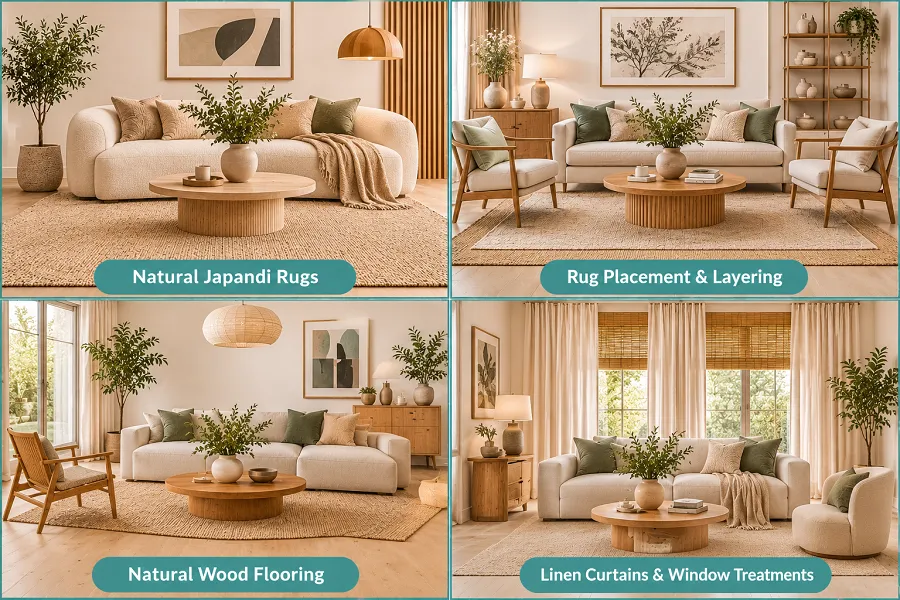
The soft layers do a lot of the work. Good living room carpets, rugs, and curtains add warmth, cut echo, and tie the room together.
Best Rugs for a Japandi Living Room
A japandi living room rug should be simple and natural. Among the many types of rugs, wool rugs, jute rugs, and flatweave rugs are good picks. A beige wool rug or beige carpet in a low pile feels soft and quiet. Choose plain colors or a small, subtle pattern. Avoid loud prints and bright borders.
Size matters. Check standard rug sizes first, then plan your rug placement in the living room. The rug should be large enough that at least the front legs of your sofa and chairs sit on it. A rug that is too small makes the room feel cut up. If you already have carpet, you can still layer a rug over carpet.
Add a good carpet underlay or rug pad. It stops slipping and adds comfort underfoot. If you choose wool, it also helps to know how to clean wool carpets before you buy.
Flooring
Light wood floors fit the style best, with a matte finish. If you rent, a large rug can soften plain or cold floors. Some people also use tatami-style mats in a reading corner for a true Japanese touch. If you prefer a soft floor throughout, learn how to choose a carpet for your home, and use professional carpet installation so the edges stay neat. Sisal carpets also bring a woven, natural texture that suits the style.
Curtains and Window Treatments
Choose linen or cotton curtains in cream, oat, or soft grey. Hang them high and wide so the window looks larger. Sheer panels let light pass during the day. Roman shades and bamboo blinds are good if you want a cleaner look with less fabric.
Decor, Wall Art and Plants
Decor in this style is small in number and big in meaning. Pick a few items you really like instead of filling every shelf.
- Ceramics: One handmade vase or bowl does more than five matching ones.
- Plants: A bonsai, a branch in a vase, or a simple leafy plant brings life to the room. Ikebana, the Japanese art of flower arranging, uses few stems on purpose.
- Wall art: Choose one or two calm pieces, such as a soft line drawing, a landscape, or a woven wall hanging. Leave space around them.
- Mirrors: A round or arched mirror in a wood frame adds light without adding clutter.
- Shelves: Leave about a third of each shelf empty. Empty space gives the eye a place to rest.
Think of each surface like a small stage. One or three items look better than four or five.
How to Create a Japandi Living Room Step by Step
You do not need to start over. You can build a minimalist lifestyle japandi living room one step at a time. Here is a simple order that works for most homes.
- Clear the room. Take out everything that you do not use or love. Keep only what is useful or beautiful.
- Pick your palette. Choose a warm neutral base and one or two earthy accents. Paint or add large fabric pieces first.
- Choose a low sofa. Pick a simple shape in a neutral color. This is the anchor for the whole room.
- Add natural wood. Bring in a coffee table, a side table, and a console in oak, ash, or walnut.
- Layer rug and textiles. Place a wool or jute rug, then add linen curtains, a throw, and a few cushions.
- Set up your lighting. Add two or three soft lamps and swap harsh bulbs for warm ones.
- Finish with a few decor pieces. Add one plant, one ceramic piece, and one piece of art. Stop there, and live with it for a week before adding more.
This order works because each step supports the next. If you plan a living room japandi interior design project in stages, you avoid buying things that do not fit.
Common Japandi Living Room Mistakes to Avoid
Most japandi rooms go wrong in the same few ways. Check your room against this list.
- Making it too stark. Too much white, too few textiles, and no warmth makes the room feel cold. Add wool, linen, and wood.
- Adding too many accessories. Japandi needs space. If every shelf is full, remove half of it.
- Buying pieces that look the same. A full matching set looks flat. Mix wood tones and shapes a little.
- Ignoring texture. A room of smooth, flat surfaces feels dull. Add something rough, soft, or woven.
- Choosing the wrong size. A huge sofa in a small room or a tiny rug in a big room breaks the balance. Measure first.
- Using harsh lighting. One bright overhead bulb ruins the mood. Use warm, low lamps.
Japandi vs Scandinavian vs Wabi-Sabi vs Minimalist
These styles share some features, so people mix them up. This table shows the main differences.
| Style | Mood | Colors | Furniture | Key difference |
| Japandi | Calm and warm | Warm neutrals with earthy accents | Low, simple, natural wood | Blends Japanese restraint with Nordic comfort |
| Scandinavian | Bright and cozy | White, grey, soft pastels | Light wood, rounded shapes | More color and more cozy items |
| Wabi-sabi | Quiet and worn | Muted earth tones | Handmade, aged pieces | Celebrates imperfection |
| Minimalist | Clean and sparse | White, grey, black | Plain, modern shapes | Focus on owning very little |
If you like mid-century shapes, you can mix a few into a japandi room. A mid century japandi living room uses tapered wood legs and warm walnut, but keeps the calm colors and low clutter of japandi. Just keep the total number of pieces small.
FAQs About Japandi Living Rooms
Q1. What is a Japandi living room?
A japandi living room mixes Japanese minimalism with Scandinavian comfort. It uses low furniture, natural materials, warm neutral colors, and soft light. The goal is a calm, tidy space that still feels warm and welcoming.
Q2. What colors work best in a Japandi living room?
Warm neutrals work best, such as sand, cream, beige, and greige. Add earthy accents like sage green, muted blue, clay, or charcoal. Keep the contrast low, and choose matte finishes instead of shiny ones.
Q3. What furniture is best for a Japandi living room?
Choose a low sofa with slim legs, a solid wood coffee table, a simple accent chair, and closed storage. Oak, ash, and walnut are good wood choices. Keep the number of pieces small so the room stays open.
Q4. How do I make a small living room Japandi?
Use light woods, furniture with raised legs, and one large mirror. Keep surfaces clear and choose multi-use pieces, such as a coffee table with storage. Leave one wall plain so the room feels open.
Q5. Can a Japandi living room be dark or moody?
Yes. Use charcoal, mocha, or soft black walls with warm wood and linen. Add a light rug and soft lamps so the room does not feel heavy. Keep the furniture low and the shapes simple.
Q6. What is the difference between Japandi and Scandinavian style?
Scandinavian style is brighter, with white walls and light pastels. Japandi is calmer and earthier, with warmer tones and darker wood. It also uses fewer items and leaves more empty space.
Q7. What rugs suit a Japandi living room?
Natural rugs in wool, jute, or flatweave suit it best. Pick plain colors or a soft, small pattern, and choose a low pile. Make sure the rug is large enough for the front legs of your sofa and chairs.
Q8. How do I add warmth without clutter?
Use texture instead of objects. A wool throw, linen curtains, a warm lamp, and a wood table add warmth without filling the room. Keep surfaces mostly clear, and add one natural item, such as a plant or a ceramic bowl.
Final Thoughts
A japandi living room is not about following strict rules. It is about making a room that feels calm, warm, and easy to live in. Start with a warm base, add low furniture and natural textures, and keep the lighting soft.
You do not need to do it all at once. Pick one idea from this guide, try it for a week, and see how the room feels. Small changes add up, and a japandi style living room grows best with patience.