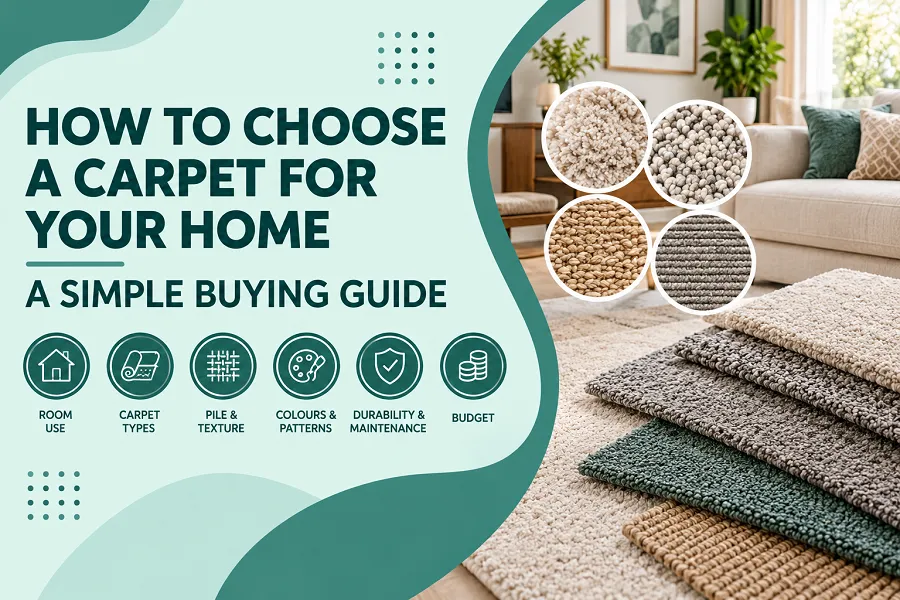
Picking carpet feels like a big job. There are many fibers, styles, colors, and price tags to sort through. Most people buy carpet only a few times in their lives, so it is easy to feel lost.
To choose carpet, match the fiber, pile style, and cushion to how the room is used. Check the color in your own light, compare warranties, and add up the full cost, including cushion and installation, not just the carpet price.
This carpet buying guide from Carpet Land walks you through each step in plain words. You will learn the main carpet types, the best carpets for each room, and the common mistakes that can waste your money.
Quick Steps: How to Choose Carpet
Use this list as your road map. Each step is explained below.
- Decide how the room is used and how much foot traffic it gets.
- Set a total budget that includes cushion, installation, and old flooring removal.
- Pick a style, such as cut pile, loop pile, or cut and loop.
- Pick a fiber, such as nylon, polyester, triexta, olefin, or wool.
- Check quality terms like face weight, density, and twist.
- Choose a cushion that suits the carpet and the room.
- Take samples home and view them in your own light before you buy.
What to Know Before You Start Your Carpet Search
Good carpet choices start with honest answers about your home. Spend ten minutes here before you look at a single sample.
Five Questions to Ask First
- How will the room be used? A guest room and a family room need very different carpet.
- How much foot traffic will it get? Hallways, stairs, and play areas wear out faster than bedrooms.
- Does the room open straight to the outdoors? Shoes bring in grit, and grit wears down fibers.
- Does the room get strong sun? Direct sun can fade color over time.
- Who lives in the home? Pets, young kids, and older adults all change what works best. If you have heated flooring, ask the carpet maker if your choice is safe to use with it.
Set a Total Budget
Many stores price carpet by the square foot or square yard. That number often leaves out cushion, installation, and the cost to remove old flooring. Set one total budget first, then shop for carpet that fits inside it. You will avoid a surprise bill later.
Carpet Types: Main Styles and Constructions
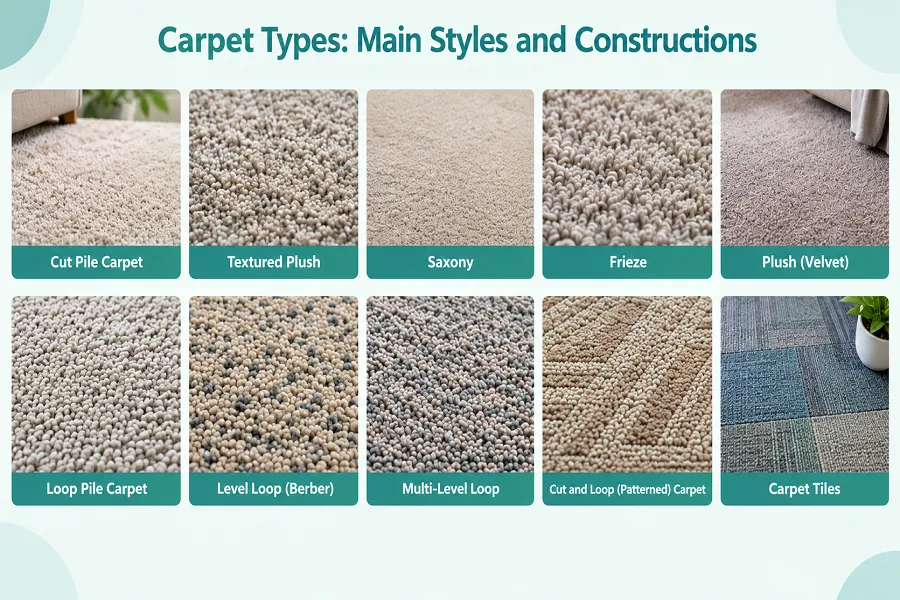
Carpet types come down to how the yarn is finished on top. The yarn is cut, looped, or a mix of both. That one choice changes how the carpet looks, feels, and wears. Knowing the main types of carpet makes every store visit easier.
Cut Pile Carpet
In cut pile carpet, the yarn loops are cut open, so you walk on the tips of the yarn. The surface feels soft and smooth. How long it lasts depends on the fiber, how tightly the tufts are packed, and how much twist the yarn has.
Best for:
- Bedrooms, living rooms, and family rooms
- Homes that want a soft feel underfoot
Textured Plush
Textured plush has uneven, two-tone yarn that hides footprints and vacuum marks well. It looks casual and feels soft. It is one of the most popular styles for busy family rooms.
Best for:
- Busy family rooms and living rooms
- Homes with kids that want a soft, forgiving surface
Saxony
Saxony has a smooth, even surface and a neat, tailored look. It gives a more formal feel to a room. It shows footprints, so it works best where traffic is light.
Best for:
- Formal living and dining rooms
- Low-traffic rooms where looks come first
Frieze
Frieze yarn is long and tightly twisted, so the surface looks curly and relaxed. The curls hide marks, dirt, and vacuum lines. It stays cozy underfoot while handling daily wear.
Best for:
- Hallways and stairs
- Casual spaces and homes with pets
Plush (Velvet)
Plush carpet is dense and very smooth. It feels rich and soft underfoot. It also shows every footprint and vacuum line, so it needs a quiet room.
Best for:
- Bedrooms and guest rooms
- Quiet rooms with little foot traffic
Loop Pile Carpet
In loop pile carpet, the yarn stays in loops instead of being cut. Loops tend to be tough and hold up well to heavy use. The surface feels firmer than cut pile.
Best for:
- Busy rooms and basements
- Homes that want a tough, low-maintenance floor
Level Loop (Berber)
All loops sit at the same height. Most people call this style Berber. Older versions had dark flecks on a light base, but many modern ones are solid colors. Level loops resist crushing and stay neat for years.
Best for:
- Basements and play areas
- High-traffic rooms without scratching pets
Multi-Level Loop
This style mixes two or three loop heights to form a pattern. It looks casual and hides wear well. It stays durable even where people walk often.
Best for:
- Active family homes
- Hallways and home offices
Cut and Loop (Patterned) Carpet
This type mixes cut and looped yarn to make shapes like squares, swirls, and chevrons. The mix of textures and tones hides dirt and stains. It adds style without looking too bold.
Best for:
- Kids’ rooms and family rooms
- Hallways that need to hide everyday dirt
Carpet Tiles
Carpet tiles are small squares or planks laid like floor tile. If one gets stained or damaged, you swap only that piece. This makes repairs simple and low cost.
Best for:
- Basements, playrooms, and home offices
- DIY projects and spaces that need easy repairs
Carpet Types at a Glance
| Style | Look and feel | Best for | Watch out for |
| Textured plush | Soft, casual, hides marks | Family rooms, bedrooms | Wear in very heavy traffic |
| Saxony | Smooth, formal | Dining and living rooms | Shows footprints |
| Frieze | Curly, relaxed | Hallways, stairs | Casual look may not suit formal rooms |
| Plush (velvet) | Dense, rich | Bedrooms, quiet rooms | Shows marks easily |
| Level loop (Berber) | Flat, tight, sturdy | Basements, busy rooms | Can snag on pet claws |
| Multi-level loop | Patterned, casual | Active homes | Can snag on pet claws |
| Cut and loop | Patterned, hides dirt | Kids’ rooms, hallways | Bold patterns limit decor changes |
| Carpet tile | Modular squares | Basements, offices | Seams between tiles show |
Types of Carpet Fibers: Which Is the Best Carpet Type?
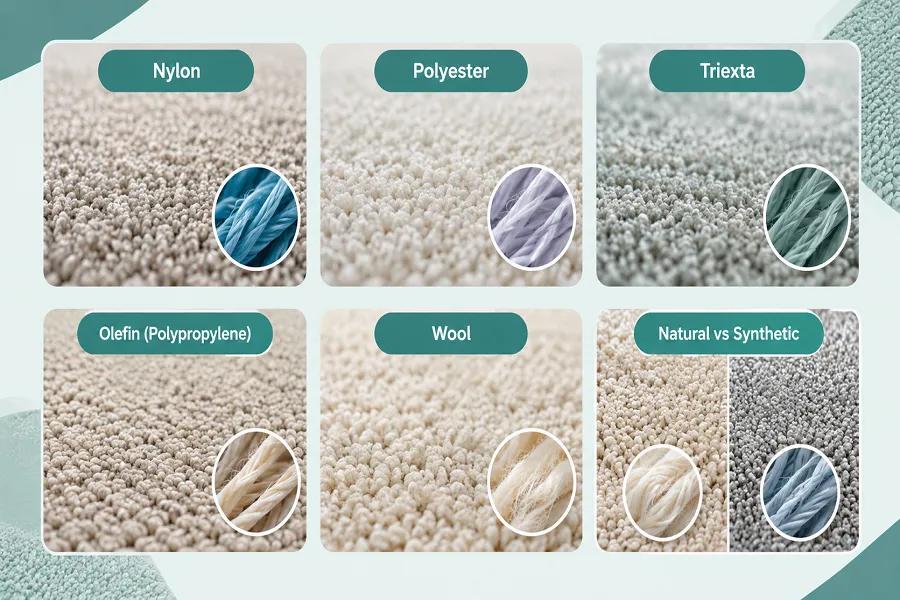
No single best carpet type fits every home. Nylon is a strong all-round choice for busy areas. Polyester feels soft and costs less. Wool is a premium natural fiber. The best types of carpet are the ones that match your room, your traffic, and your budget.
The fiber is what you walk on, so it shapes how the carpet wears, cleans, and feels.
Nylon
Nylon is very strong and bounces back after being stepped on. That makes it a top pick for stairs, hallways, and family rooms. It usually costs more than other synthetic fibers. Many nylon carpets are solution-dyed, which means the color is built into the fiber. This helps resist fading, so look for that term on the label.
Polyester
Polyester is soft and resists stains well. It costs less than nylon or wool. Older versions flattened quickly, but newer yarns hold up much better. Some polyester carpet is made from recycled plastic bottles. It can still mat down faster than nylon in very busy spots, so it suits bedrooms and light-use rooms.
Triexta
Triexta is a newer fiber known for strong stain resistance and good durability. It feels soft and is a good fit for family homes with kids.
Olefin (Polypropylene)
Olefin is one of the lowest-cost fibers. It resists moisture and mildew, so it shows up in basements and indoor-outdoor carpet. It is less springy than nylon, so makers often use it in tight loops. It suits low-traffic rooms.
Wool
Wool is a natural fiber that people have used for centuries. Wool carpets are strong, resilient, and long lasting. They cost more than synthetic fibers, and many synthetics now come close to their performance. Wool makes sense when you want a natural material and your budget allows it.
Natural vs Synthetic Carpet
Natural fibers like wool look classic and feel warm. Synthetic fibers like nylon and polyester usually cost less and are easier to treat for stains. Blends mix both to balance feel and price. If you care about what your carpet is made of, ask for the fiber content and look for third-party low-emission labels.
Carpet Fibers at a Glance
| Fiber | Durability | Stain resistance | Price level | Best for |
| Nylon | Very high | Good | Higher | Stairs, hallways, family rooms |
| Triexta | High | Very good | Varies by line | Family homes |
| Polyester | Medium | Very good | Lower | Bedrooms, light use |
| Olefin | Lower | Good, resists moisture | Lowest | Basements, low-traffic loops |
| Wool | High | Moderate | Highest | Bedrooms, living rooms |
Ratings are general. Quality varies a lot between product lines.
Best Carpet for Each Room and Lifestyle
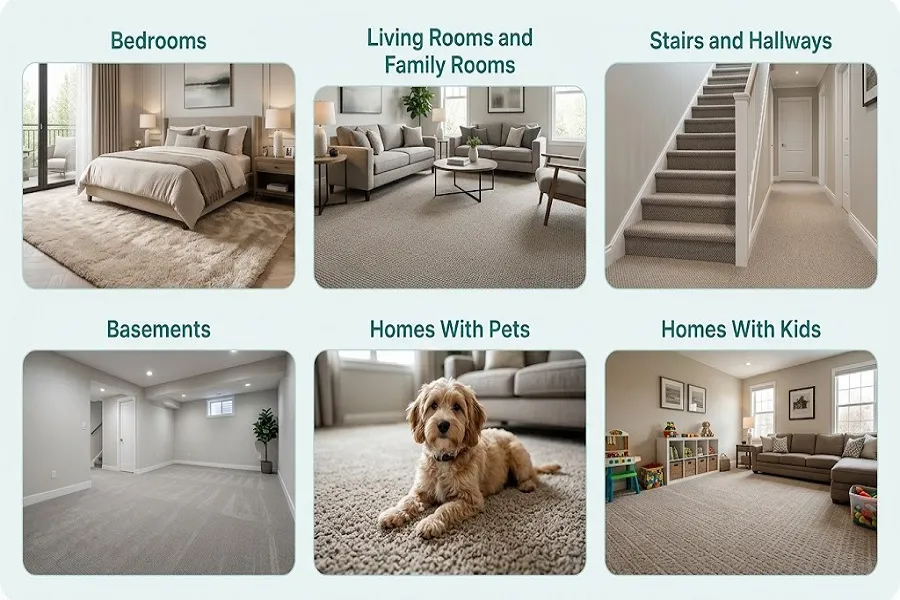
The best carpet is the one that fits the room. Bedroom carpets should feel soft underfoot, while a hallway needs a durable carpet that handles heavy foot traffic. A basement carpet should also cope with damp air. When you choose by room, you avoid paying for features you will not use. You also reduce the risk of choosing a carpet that wears out in a year. Use the sections below to find the right match for each space in your home.
Bedrooms
Bedrooms see light traffic, so comfort comes first. You walk on this carpet in bare feet, often first thing in the morning. Soft, cozy styles make the biggest difference here. You can also use a thicker, softer cushion because the floor will not take heavy wear.
- Best styles: Textured plush or plush
- Best fibers: Polyester for a soft feel and lower cost, or wool for a natural, premium feel
- Best cushion: Thicker and softer, within the carpet maker’s rules
- Good to know: Plush shows footprints, but a bedroom rarely gets enough traffic to make that a problem
Living Rooms and Family Rooms
These rooms get the most daily use. People walk, sit, play, and spill here, so the living room carpets needs to handle it all. A good choice hides marks and stays neat between cleanings. A medium or darker shade also helps hide dirt.
- Best styles: Textured plush, frieze, or cut and loop
- Best fibers: Nylon or triexta for strong durability
- Best colors: Medium or darker tones, or flecked shades
- Good to know: Check the wear and texture retention warranty before you buy
Stairs and Hallways
Stairs and hallways take more wear than almost any other spot in the home. Everyone passes through, and stairs bend the carpet at every step. When choosing stair carpets, density and twist matter more than softness because they help the fibers resist crushing and wear. A thick, soft cushion lets the carpet flex and wear out faster, so a firm, thin underlay works better.
- Best styles: Frieze, patterned, or tight cut pile
- Best fibers: Nylon or triexta
- Best cushion: Firm and thin, as the carpet maker advises
- Good to know: Some warranties exclude stairs, so read the fine print first
Basements
Damp air and mildew are the main risks below ground level. Fix any moisture problem before you install anything. After that, pick a carpet that handles humidity and keeps its shape. Low pile with a high face weight tends to work best.
- Best fibers: Olefin, nylon, or polyester
- Best styles: Low pile, level loop, or carpet tile
- Best cushion: One with a built-in moisture barrier
- Good to know: Carpet tiles let you lift and replace a wet tile without redoing the room
Homes With Pets
Pets bring claws, accidents, and hair. Two choices matter most: the pile style and the stain protection. The right pair makes daily cleanup much easier. The wrong pair can leave you with pulled loops and stubborn smells.
- Best styles: Cut pile, such as textured plush or frieze
- Best features: Strong stain and soil protection
- Best colors: Mid-tone or flecked shades that hide hair
- Good to know: Clean accidents fast, since warranties often exclude some pet stains
Why Cut Pile Suits Pets
Cut pile styles like textured plush and frieze are less likely to snag on nails. The yarn ends are separate, so a claw does not catch on a loop and pull. These styles also feel soft for pets to lie on. Pair them with built-in stain and soil protection so accidents clean up faster.
- Textured plush hides hair and paw marks well
- Frieze has a curly surface that hides dirt
- Cut pile is less likely to pull when claws catch
- Stain protection helps liquids sit on top, so you can blot them up
Why Loops Can Snag Claws
Loop carpet can catch on claws and pull. One snagged loop can run and leave a visible line. This is the biggest weak spot of Berber in pet homes. If you love the look but have a scratching cat or an active dog, test a sample first.
- Small, tight loops snag less than large, chunky ones
- Cats that scratch the floor can damage loops fast
- Never pull a snagged loop. Trim it flat with scissors instead
- Ask the seller how the carpet handles claws before you buy
Homes With Kids
Kids spill, crawl, and wear things out. Juice, mud, and art supplies are part of life. A good kid-friendly carpet hides stains, cleans up well, and handles rough play. Patterns and mid-tone colors do a lot of this work for you.
- Best fibers: Nylon or triexta for durability, or polyester for strong stain resistance
- Best styles: Cut and loop, textured plush, or carpet tile
- Best colors: Mid-tone, flecked, or patterned
- Good to know: With carpet tiles, you replace one stained square instead of the whole floor
Homes With Allergy Concerns
Carpet can hold dust and pollen, so cleaning habits matter more than the carpet type. A regular routine keeps dust under control. You can also choose products with lower chemical emissions. If allergies are a serious concern, talk with your doctor before you decide.
- Vacuum often with a vacuum that has a good filter
- Have the carpet professionally cleaned as the maker advises
- Look for low-emission labels on the carpet, cushion, and glue
- Choose a short pile if you want a surface that is easier to vacuum
Carpet Quality Terms in Plain Words
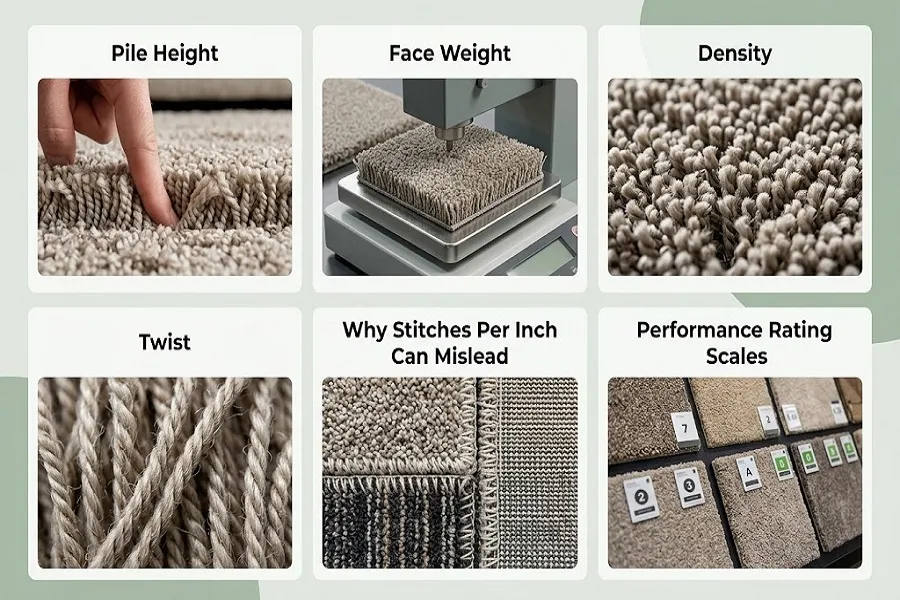
Store labels use terms that sound technical. Here is what each one means. Compare these numbers only between carpets of the same fiber and style.
Pile Height
Pile is the length of the yarn above the backing. Tall pile feels plush. Short pile looks tight and is often easier to clean. Taller does not mean better quality.
Face Weight
Face weight is how much yarn sits in the surface. It is measured in ounces per square yard or grams per square meter. More yarn can mean better wear, but only when you compare two similar carpets.
Density
Density is how tightly the yarn is packed. Bend a sample backward. If you see a lot of backing, the carpet is less dense. Tight packing resists crushing.
Twist
Twist is how many times the yarn turns in one inch (2.5 cm). Higher twist usually holds its shape longer under traffic.
Why Stitches Per Inch Can Mislead
Some sellers push stitch count. That number changes with style and fiber, so it is a poor way to compare. Look at face weight, density, and twist instead.
Performance Rating Scales
Some makers use a 1 to 5 scale for how well a carpet keeps its look. Higher is better. Ask what the scale measures, and compare only within one maker’s range.
How to Pick Carpet Color and Pattern
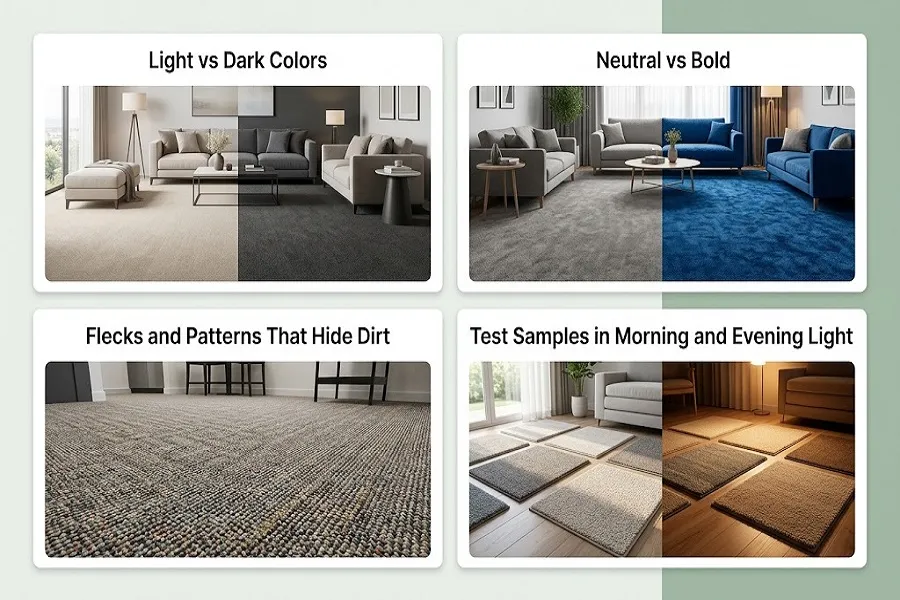
To pick carpet color, start with the light in the room and the dirt it will face. Then choose a shade you will enjoy for many years. Carpet is not something you swap often.
Light vs Dark Colors
Light colors make a room feel open and bright. Dark colors feel cozy and hide dirt. Modern stain protection makes light carpet easier to clean, but it still needs regular care. Medium tones are a safe middle path.
Neutral vs Bold
Neutral shades like beige, gray, and soft brown work with most furniture and paint. They also leave room to change your decor. A bold color can look great, but it limits future changes. If you love color, add it with rugs and curtains.
Flecks and Patterns That Hide Dirt
Tweed, flecks, and patterns break up the surface, so crumbs and spots blend in. This helps in hallways, kids’ rooms, and family rooms.
Test Samples in Morning and Evening Light
Carpet color changes with light. A shade that looks warm in the store can look gray at home. Try this simple test:
- Take two or three samples home.
- Lay each one on the floor where the carpet will go.
- Look at them in morning, afternoon, and evening light.
- Check them again at night with your lamps on.
- Hold them next to your furniture and wall paint.
- Leave them for a few days. If you still like a color on day four, that is a good sign.
Carpet Cushion: The Part You Cannot See
Cushion sits under the carpet, and it matters. The right cushion adds comfort, absorbs shock, cuts noise, adds warmth, and helps the carpet last. The wrong one can cause wrinkles, early wear, and a voided warranty.
Cushion Types
Common types include rebond foam (made from recycled foam and very common), other foams, fiber, and rubber. Some come with a moisture barrier that keeps spills from soaking into the foam.
Thickness and Density Rule of Thumb
Always follow the carpet maker’s rules first. As a general guide:
- Most cut pile carpet: cushion about 6 to 11 mm (1/4 to 7/16 inch) thick, with a density near 96 kg per cubic meter (6 lb per cubic foot).
- Berber and low-profile carpet: no thicker than about 10 mm (3/8 inch), with a higher density near 128 kg per cubic meter (8 lb).
- Light-use rooms: thicker, softer cushion is fine. Busy areas: use thinner, firmer cushion.
When You Do Not Need Cushion
Many glue-down or peel-and-stick carpet tiles have the backing built in, so you do not buy a separate cushion. Check the product details to be sure.
Carpet Warranties and Air Quality Labels
A warranty tells you what the maker will fix and what they will not. Read it before you buy, not after a spill.
Stain, Wear, and Texture Retention Warranties
- Stain and soil warranty: covers certain spills and dirt build-up.
- Wear warranty: covers loss of yarn from rubbing.
- Texture retention warranty: covers how well the carpet keeps its shape.
Coverage lengths vary by product line, so compare them side by side.
What Can Void a Warranty
Common problems include the wrong cushion, skipping required cleanings, and installing carpet in a room the warranty excludes. Many warranties also leave out some stains, such as strongly colored foods like mustard or coffee, and some pet accidents.
Low-Emission Certification Labels
Some carpet, cushion, and glue carry third-party labels that show low chemical emissions, often called VOCs. These labels matter most if you care about indoor air quality. Ask the seller which products carry them.
How Much Does Carpet Cost?
Carpet cost depends on fiber, face weight, pile style, cushion, and installation. The price of the carpet alone rarely tells the full story, so compare total project costs.
What Drives the Price
Fiber and face weight are two of the biggest factors. Wool and nylon usually cost more than polyester and olefin. More yarn in the surface adds cost. Cushion quality and room shape matter too, since odd-shaped rooms create more waste.
Hidden Costs Checklist
- Measuring
- Cushion
- Professional installation
- Moving furniture
- Removing and hauling away old flooring
- Tack strips, transitions, and thresholds
- Extra carpet for seams and waste
- Professional cleaning later
Ask for the total in writing.
Ways to Save
Use a lower-cost fiber in low-traffic rooms and spend more where traffic is heavy. Carpet only the rooms that benefit from its comfort. Compare quotes that list the same items. Do not cut corners on cushion, since it protects the carpet and your warranty.
7 Common Mistakes When Choosing Carpet
- Choosing by color alone. A pretty carpet that mats in a year is no bargain.
- Skipping samples at home. Store lights change how color looks.
- Using plush in a busy hallway. It will show every step.
- Picking loops for pets that scratch. Claws can snag them.
- Cutting corners on cushion. It can hurt comfort and void a warranty.
- Comparing prices without installation and cushion. The cheapest carpet may cost more in total.
- Ignoring moisture. Damp basements, kitchens, and bathrooms invite mold and mildew. Fix moisture first or pick another floor.
How to Keep Your New Carpet Looking Good
Good care protects your investment and your warranty.
- Vacuum often. Busy areas need it at least twice a week.
- Blot spills right away with a white cloth and cool water. Do not scrub.
- Book professional hot water extraction cleaning. Once a year is common, but follow your warranty.
- Move furniture now and then so wear does not build up in one spot.
FAQs About Choosing Carpet
Q1. What is the best type of carpet for a home?
It depends on the room. For most family homes, textured plush cut pile in nylon or triexta handles daily life well. Bedrooms can use softer plush. Basements do better with low-pile synthetic carpet or carpet tile.
Q2. What is the most durable carpet type?
Durability comes from fiber, twist, and density. Nylon and triexta are known for strong durability. Tight loops and high-twist cut pile also hold up well in busy spots.
Q3. How do I pick carpet for high-traffic areas?
Choose nylon or triexta, a dense or tightly twisted style, and a firm cushion. Medium tones and patterns hide wear. Check that the wear warranty covers the area.
Q4. Which carpet is best for pets?
Cut pile with strong stain protection works best. Avoid loops that claws can snag. A mid-tone or flecked color hides hair and spots.
Q5. Is thicker carpet better?
Not always. Pile height and quality are different things. Tall, loose pile feels soft but can be harder to clean. Density, face weight, and twist tell you more.
Q6. What is the best carpet for bedrooms?
Softness matters most. Textured plush, plush, or wool feels great on bare feet. Pair it with a cushion the carpet maker approves.
Q7. What is the best carpet for stairs?
Pick a dense, tightly twisted carpet in nylon or triexta, with a pattern or frieze look. Use a firm cushion, and check that your warranty covers stairs.
Q8. How do I pick carpet color?
Test samples at home in morning and evening light. A medium neutral hides dirt and keeps decor options open. Add bold color with rugs and curtains.
Conclusion
The best carpet for your home comes down to three choices: style, fiber, and cushion. Pick cut pile, loop pile, or cut and loop based on how the room is used. Choose nylon or triexta for busy rooms, polyester for light use, or wool if you want a natural, premium feel. Then match the cushion to the carpet maker’s rules for thickness and density.
Before you buy, take samples home and look at them in morning and evening light. Ask for a written total that includes cushion, installation, and old carpet removal, and read the warranty so you know what is covered.
Take your time with this choice. A carpet you pick with a clear plan will look good and feel comfortable for many years. Keep this carpet buying guide handy as a checklist when you shop.